
How to Clean Window Tracks Without Turning Dirt Into Mud
The best way to learn how to clean window tracks is to remember one rule: start dry. Vacuum and brush out the loose dirt first, then clean with a little soapy water, then dry the track and clear the drain holes. If you spray water into a dirty track first, the dust, grit and dead bugs turn into mud that packs into the corners.
01 · The rule
Why Should You Start Dry When Cleaning Window Tracks?
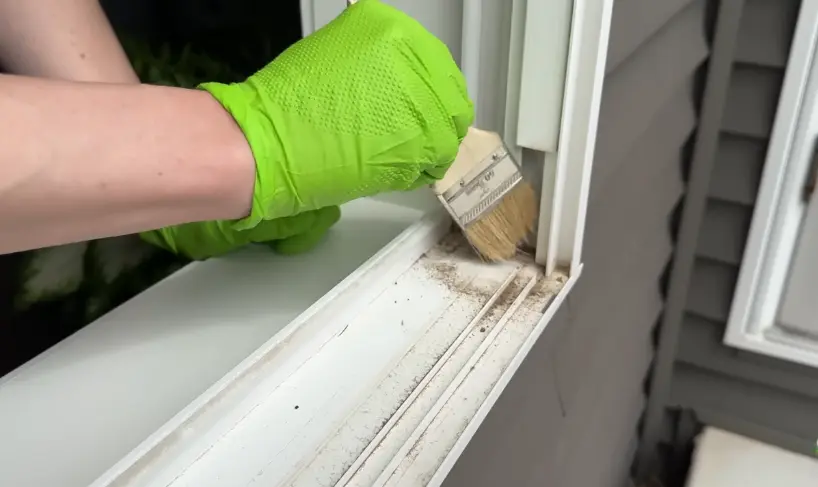
Window tracks collect dry debris all year: dust, pollen, grit from shoes, pet hair, dead insects and bits of leaves. As long as it stays dry, most of it lifts out easily with a brush and vacuum.
Add water first, and that dry debris turns into a thick paste. It sticks to the corners, slips under the rubber seals and gets pushed into the drain holes, which makes the job slower and the result worse.
In a damp climate like Bellingham’s, tracks also hold moisture from rain and winter condensation on the inside of windows. That’s why grime builds up so quickly between October and spring.
02 · Your kit
What Do You Need to Clean Window Tracks?
You don’t need special products. A few household tools do the job:
Skip metal scrapers, steel wool and abrasive pads. They scratch vinyl and aluminum, and scratches hold dirt even faster.
03 · Step by step
How Do You Clean Window Tracks Step by Step?
For most sliding windows and doors, this takes about 5 to 10 minutes per track:
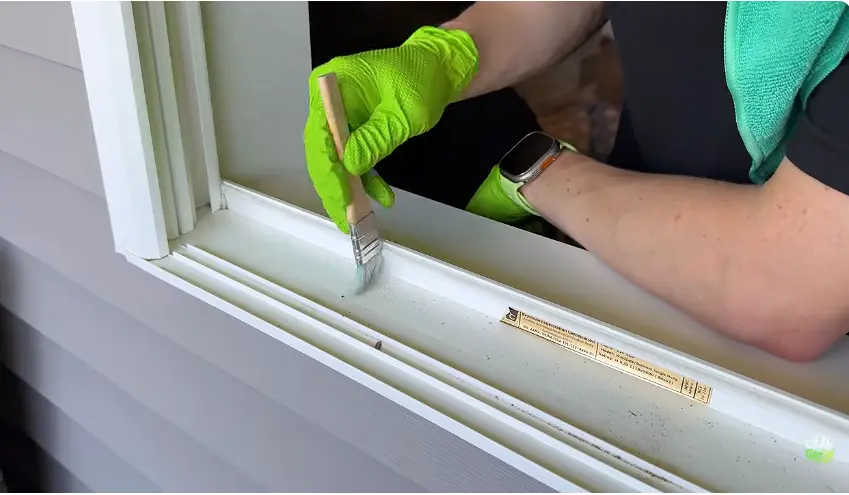
Dry-brush the track
Open the window fully. Use the brush to loosen debris from the corners and along the rails.
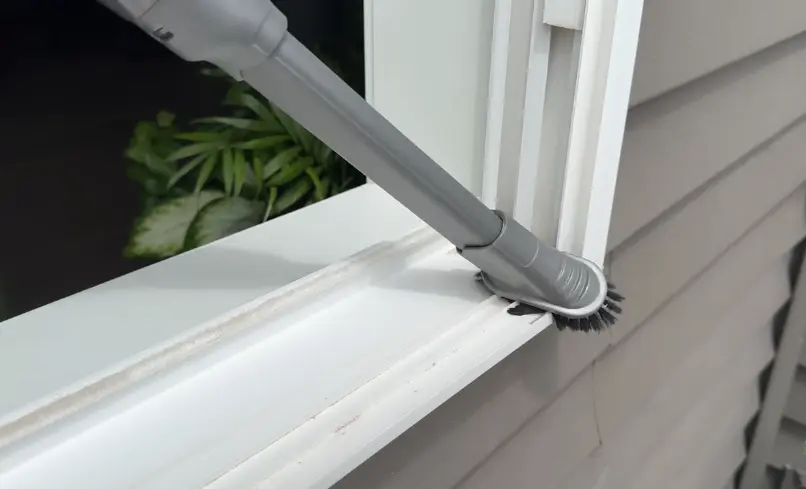
Vacuum it out
Run the crevice tool along the whole track, including both ends, where most of the dirt collects.
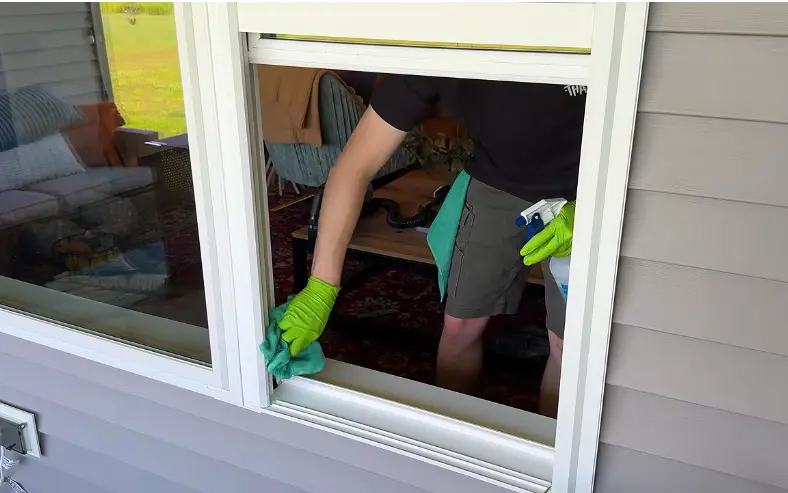
Spray and let it sit
Mist the track lightly with soapy water and wait 2 to 3 minutes so stuck grime softens.
Scrub the corners
Work the brush, swabs or wrapped putty knife into the corners and along the edges of the seals.
Wipe and dry
Wipe out the loosened grime, then dry the track completely so no water sits in it.
Check the drain holes
Clear the weep holes, as shown in the next section, and test that water drains out.
Finish by opening and closing the window a few times. A clean track usually makes a sliding window or door noticeably easier to move.
04 · Drainage
What Are Weep Holes, and How Do You Clear Them?
Weep holes are small slots along the bottom of many vinyl and aluminum window frames, usually on the outside. They let rainwater that gets into the track drain back outside instead of overflowing onto your sill.
To clear them, gently push a pipe cleaner or thin wire through each slot, then pour a small cup of water into the track. If it drains out quickly, the holes are clear. Window maker Milgard’s window and patio door care tips also recommend checking weep holes before heavy rain.
Never caulk or seal weep holes. They’re meant to be open. Blocking them traps water in the frame, where it can overflow inside or damage the window over time.
05 · Mistakes
What Mistakes Should You Avoid When Cleaning Window Tracks?
Most track-cleaning problems come from a few common habits:
| Mistake | Why it’s a problem | Do this instead |
|---|---|---|
| Spraying water into a dirty track first | Turns dust into mud that packs into corners | Vacuum and brush dry first |
| Using a pressure washer or hose | Pushes water past the seals and into the wall | Use a light mist and a cloth |
| Metal scrapers or steel wool | Scratches vinyl and aluminum | Use a plastic putty knife or swabs |
| Oil or grease on the track | Attracts dirt and turns sticky | Use a dry silicone lubricant if needed |
| Leaving the track wet | Feeds mildew in a damp climate | Dry the track before closing the window |
06 · Timing
How Often Should Window Tracks Be Cleaned in a Wet Climate?
For most Bellingham homes, cleaning tracks twice a year works well: once in spring, after the heaviest pollen, and once in early fall, before the rainy season. Sliding doors that get daily use, and windows that collect condensation in winter, may need a quick vacuum every month or two.
When Is It Worth Hiring a Professional?
Doing a few sliders yourself is easy. A professional clean makes more sense when you have many windows, upper-story tracks you can’t reach safely, years of packed-in grime, or a move-out or listing date coming up. Our track and sill cleaning includes dry-brushing, vacuuming, scrubbing and clearing the weep holes on every quoted window, and it can be added to any visit from our window cleaning in Bellingham team.
Tracks Packed With Grime?
Send a few photos, and we’ll reply with a clear quote that lists exactly what’s included. You can also see all of our glass cleaning services.
07 · Your questions
Window Track Cleaning FAQs
Can I use vinegar to clean window tracks?
Yes, a mix of equal parts white vinegar and warm water works well on grime and light mildew in most vinyl and aluminum tracks. Vacuum the track dry first, spray, let it sit for a few minutes, then scrub and dry.
How do I clean window tracks without a vacuum?
Use a dry brush to sweep debris toward one end, then lift it out with a damp paper towel or cloth. Work in short sections so you don’t push grit into the corners.
Why do my window tracks get dirty so fast?
Tracks sit at the lowest point of the window, so dust, pollen and debris settle there. In a wet climate, rain and winter condensation keep that debris damp, so it sticks instead of blowing away.
How do I clean moldy window tracks?
Vacuum the track dry first, then spray equal parts white vinegar and warm water, wait about 10 minutes, scrub and dry. Never mix bleach with vinegar or ammonia. If mold keeps returning, the cause is usually window condensation in winter.
Can you spray WD-40 on window tracks?
It’s better not to. Oily multi-use sprays leave a film that collects dust and turns tracks gritty again. If a clean window still drags, use a dry silicone spray on a cloth and wipe on a thin coat.
08 · Summary
The Bottom Line
Knowing how to clean window tracks comes down to the order you do it in. Start dry with a brush and vacuum, then use a little soapy water, scrub the corners, dry everything and clear the weep holes. Do it twice a year, and your windows will slide easier, drain better and stay free of mildew through the wet season.