
Why Do My Windows Get Condensation Inside in Winter?
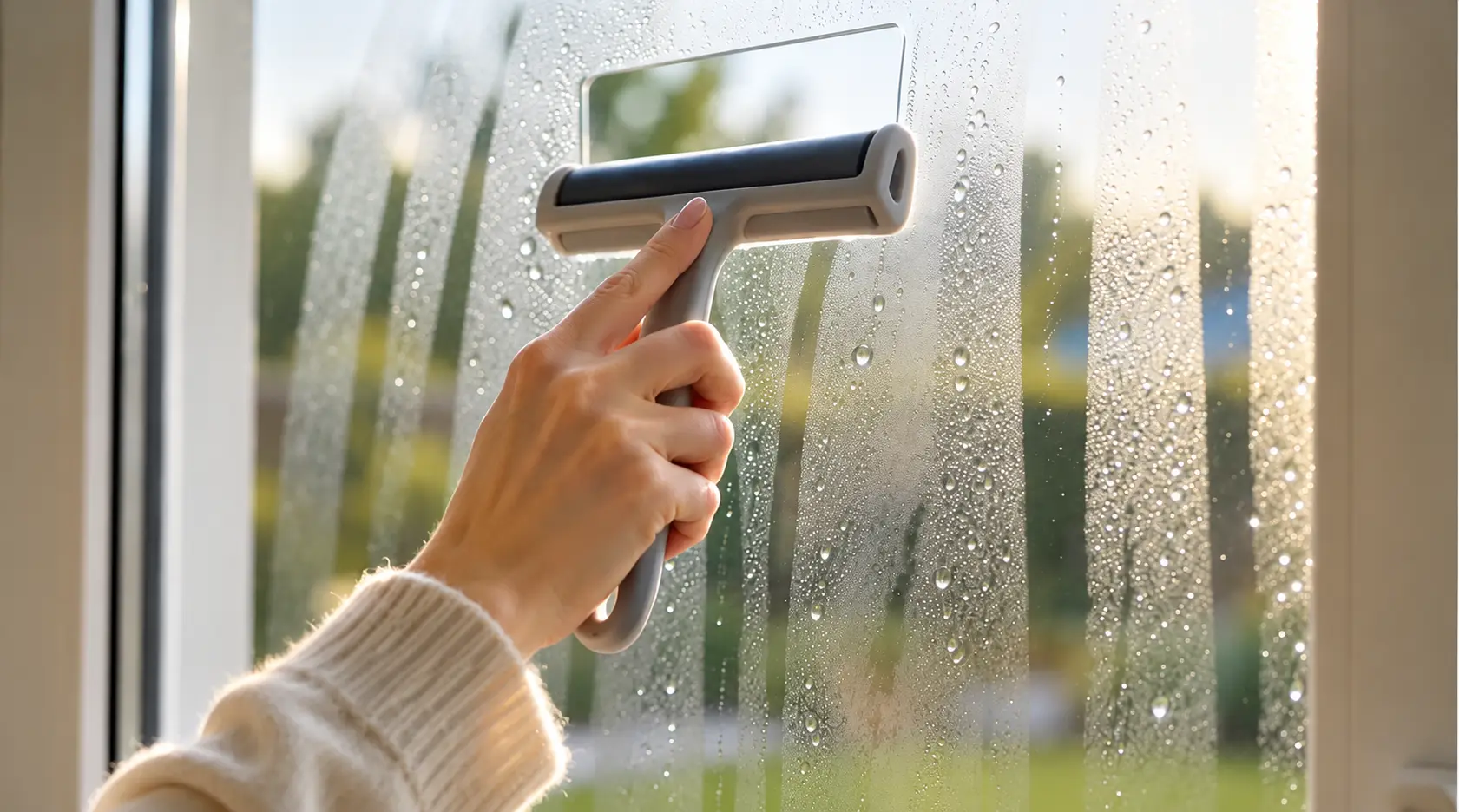
Condensation on the inside of your windows in winter happens when warm, moist indoor air touches glass that’s colder than the air’s dew point. The air cools against the pane, can’t hold all its moisture, and leaves water droplets behind. A little fog on cold mornings is common. Heavy condensation that runs down onto the sill every day is a sign your home holds more moisture than it should.
01 · The cause
What Causes Condensation on the Inside of Windows?
Two things have to happen at once: the air inside is humid, and the glass is cold. Glass is usually the coldest surface in a heated room, so it’s where moisture shows up first, just like a cold drink “sweating” on a summer day. Everyday life adds a surprising amount of water to indoor air:
In winter, homes are closed up and heated, so that moisture has nowhere to go. Meanwhile, cold outdoor air chills the glass. The bigger the gap between the warm, damp room and the cold pane, the more water collects.
Why Do Windows Fog Up Most in the Morning?
Overnight, outdoor temperatures drop and the glass gets colder. At the same time, people sleeping in closed bedrooms add moisture with every breath. By morning, bedroom windows often have the heaviest condensation in the house. Drawn curtains and blinds make it worse, because they trap cold air against the glass and keep warm room air away from it.
02 · The risk
Is Condensation on Windows Bad for Your Home?
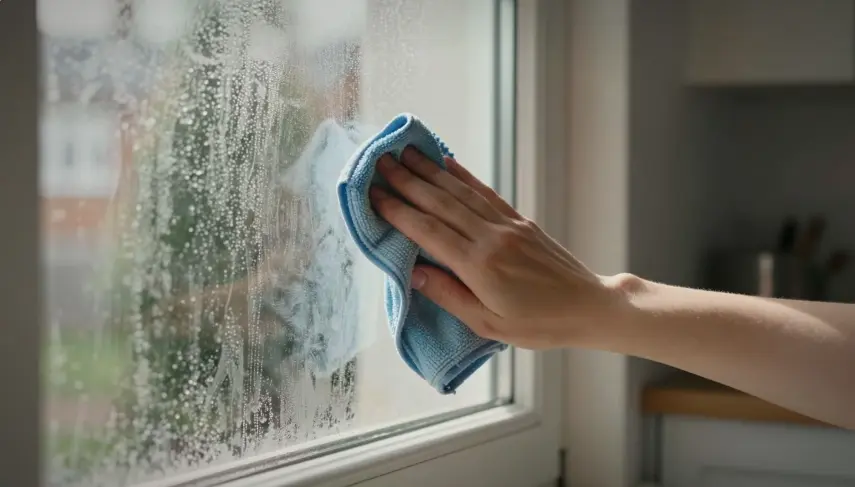
Light condensation that clears by midday isn’t usually a problem. Heavy condensation that happens every day can cause real damage over a winter:
- Black spots on sills and frames: mildew grows where water sits
- Peeling paint and soft wood: standing water soaks into wooden sills and sashes
- Stained drywall below the window
- Grimy tracks: water mixes with dust and turns into sludge
Constant condensation is also a sign of high indoor humidity, which can encourage mold elsewhere in the home. The EPA’s guide to mold and moisture recommends keeping indoor humidity below 60 percent, ideally between 30 and 50 percent.
Is It Normal for Windows to Sweat in Winter?
Some sweating on very cold days is normal, even with good windows. Energy-efficient double- or triple-pane windows keep the inside pane warmer than single-pane glass, so they usually get less condensation inside. If newer windows still drip every morning, the cause is almost always indoor humidity, not the windows themselves.
03 · Local factor
Why Is Window Condensation So Common in Bellingham?
Bellingham’s winters are cool, damp and long. Outdoor air is often already moist, so opening the house to the outside dries it less than it would in a dry climate. Fall and winter bring weeks of grey, wet weather, and many homes stay closed up and heated for months. That combination of cold glass and moist indoor air is exactly what condensation needs.
Older homes with single-pane or aluminum-framed windows tend to get the most condensation, because their glass and frames stay coldest.
04 · The fix
How Do You Stop Condensation on the Inside of Windows?
You don’t need to stop all of it. The goal is to lower indoor humidity and keep the glass a little warmer. These steps make the biggest difference:
Lower the Moisture You Add
- Run the bathroom fan during showers and for about 20 minutes after
- Use the kitchen range hood and put lids on pots
- Dry laundry in a dryer that vents outside
- Keep firewood outside or in the garage
- Move large groups of plants away from cold windows
Move Air Across the Glass
- Open curtains and blinds during the day, and leave a small gap at night
- Run a ceiling fan on low
- Keep furniture off heating vents under windows
- Open a window for 5 to 10 minutes on drier days
Control Humidity
- Use a dehumidifier in the dampest rooms, often bedrooms and basements
- Check humidity with an inexpensive hygrometer, and aim for 30 to 50 percent
- Keep the heat steady instead of letting rooms get very cold overnight
Safety note: if heavy condensation appears suddenly after you start using a gas appliance or heater, have the venting checked and make sure your carbon monoxide alarms work. Fuel-burning appliances that don’t vent properly add moisture and combustion gases to indoor air.
05 · Know the difference
What If the Condensation Is Between the Panes?
Fog or droplets between the two panes of a double-pane window are a different problem. That means the seal around the sealed unit has failed, and moist air has leaked inside. You can’t wipe it away, because it’s sealed in. Cleaning won’t fix it either. The glass unit needs to be repaired or replaced by a glazier or window installer.
Where the moisture sits tells you what’s going on:
| Where you see it | What it means | Can cleaning fix it? | What to do |
|---|---|---|---|
| Inside, on the room side | High indoor humidity meeting cold glass | You can wipe it, but it returns | Lower humidity and move air |
| Between the panes | The window’s seal has failed | No, it’s sealed in | Call a glazier or window installer |
| Outside, on cool mornings | Efficient glass keeping heat indoors | Not needed | Nothing, it clears as the day warms |
Why Is There Condensation on the Outside of My Windows?
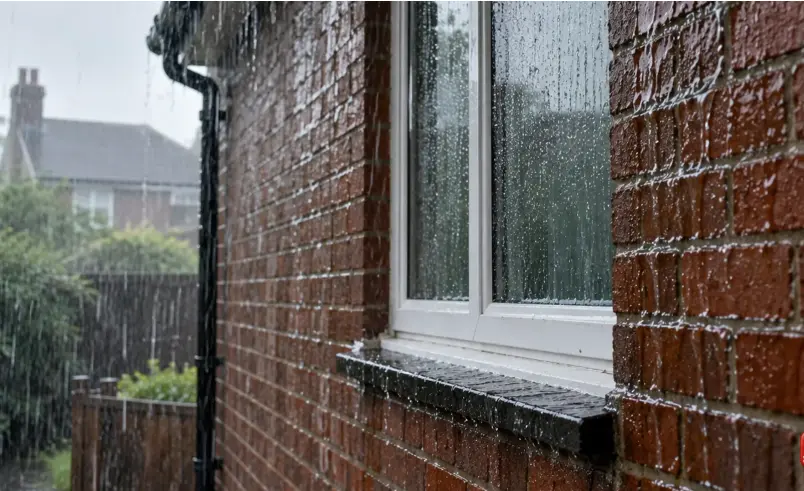
Condensation on the outside of the glass on a cool, clear morning is usually a good sign. It happens when efficient windows keep heat inside, so the outer pane stays as cold as the outdoor air and dew forms on it, just like on grass. It clears as the day warms up.
See what else cleaning can and can’t fix before you book any window work.
06 · Aftercare
How Do You Clean Up After Condensation Season?
Even with good habits, most Bellingham homes see some condensation through the winter. A few minutes of care keeps it from turning into damage:
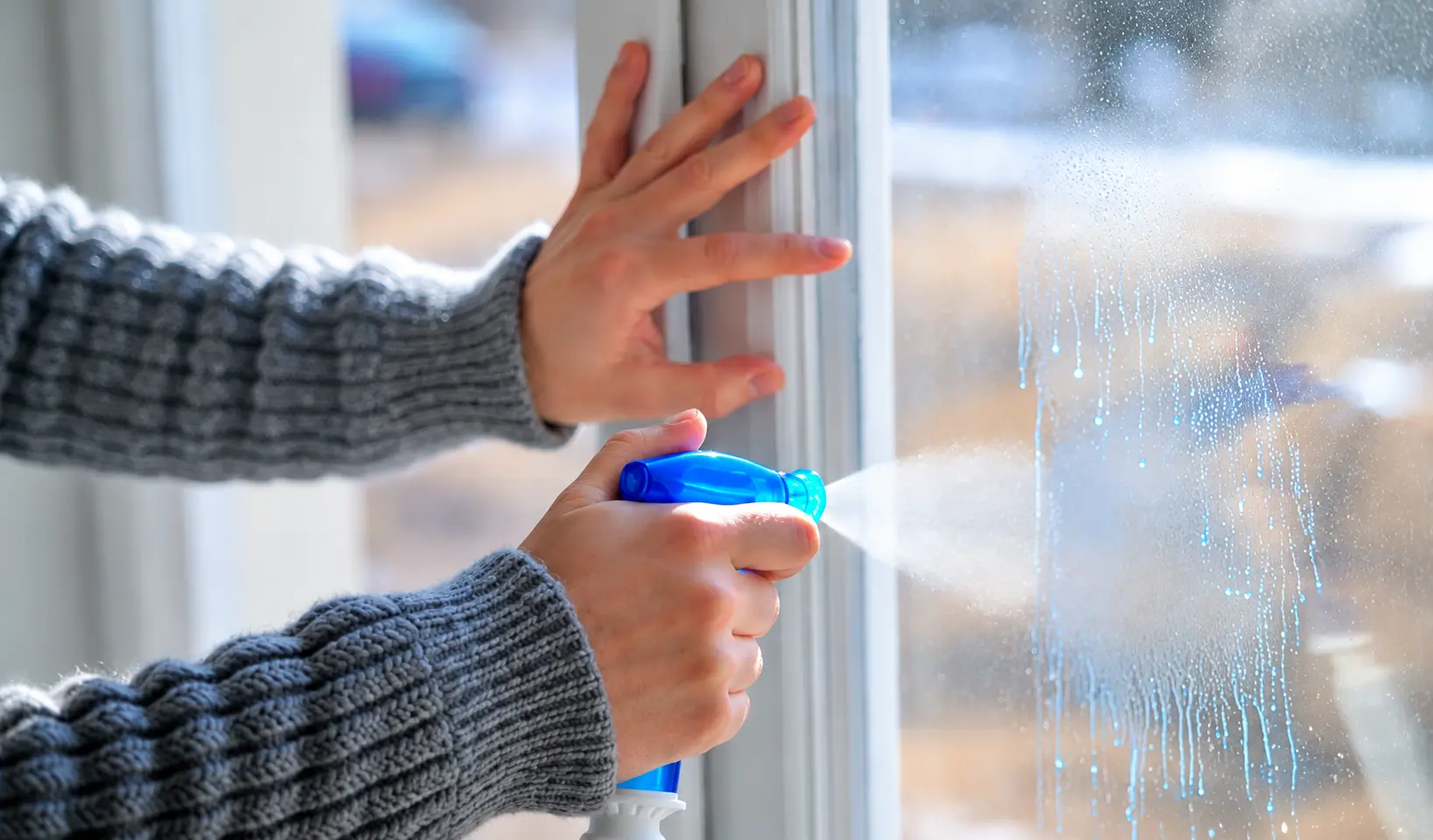
- Wipe wet glass and sills with a dry microfiber cloth in the morning
- Dry the bottom corners of the frame, where water collects
- Clean any black spots on sills before they spread, and dry the area well
- Clear grit from window tracks so water can drain through the weep holes
If winter has left your inside glass streaky and your sills and tracks grimy, our inside window cleaning covers the glass, sills, ledges and frames. For heavy buildup in tracks and on sills, track and sill cleaning gets into the corners and clears the drain slots.
Winter Glass Looking Grimy?
Send a few photos of your windows and sills, and we’ll reply with a clear quote that lists exactly what’s included. You can also see all of our glass cleaning services.
07 · Your questions
Window Condensation FAQs
Does condensation mean I need new windows?
Not usually. Condensation on the room side of the glass is caused by indoor humidity, and it happens on new windows too. Replacement is worth considering only if the seal has failed and fog sits between the panes, or if old frames are rotting.
Why do only some of my windows get condensation?
Rooms with more moisture or colder glass get it first: bedrooms overnight, bathrooms, kitchens, and windows behind heavy curtains. North-facing windows and older single-pane or aluminum-framed windows also run colder than the rest of the house.
Should I wipe condensation off my windows every day?
If water is reaching the sill, yes. A quick wipe with a dry microfiber cloth each morning keeps water from soaking into wood, feeding mildew and building up as sludge in the tracks. Light fog that clears by itself doesn’t need wiping.
Do plastic window insulation kits help with condensation?
They can. Shrink-film kits add a layer of still air in front of the glass, which keeps the inside surface warmer, so less moisture condenses there. They work best on older single-pane windows, but they don’t fix high humidity in the rest of the home.
Does a dehumidifier really stop window condensation?
It helps a lot in damp rooms. Lowering indoor humidity toward 30 to 50 percent means the air holds less water to drop on cold glass. Pair it with bathroom and kitchen fans for the best result.
08 · Summary
The Bottom Line
Condensation on the inside of your windows is moisture from indoor air meeting cold glass. A little on cold mornings is normal. Daily dripping means your home is too humid, and over a long Bellingham winter that can damage sills and frames. Run your fans, keep air moving, watch your humidity, and wipe sills dry, and most homes see a big improvement.